Travel today moves fast, so updates must too - clear messages matter most when getting around. Airports see it, train hubs feel it, buses notice it: screens guide better than static signs ever did. Instead of guessing where to go, people now watch, understand, learn, move. Real info arrives just in time, thanks to displays that adapt on their own. Direction becomes simpler. Waiting feels shorter. Attention stays focused, even amid noise and motion. StreamPurple builds these smart systems - not flash, but function shaped by need. Operators gain control. Riders gain confidence. Messages appear sharp, shift quickly, stay relevant. The result? Fewer missed stops, less confusion, smoother journeys overall.
How Digital Signs Help in Transport
Every day, transport hubs move countless people through their gates, so clear messaging matters most. Old-style fixed signs struggle to show changing details on time. Instead, digital boards at transit stops deliver live timetables, path changes, hold-ups, plus urgent notices without delay.
From one central hub, transit agencies now push time-sensitive alerts through digital signs placed at key stops. Updates roll out instantly across different stations using smart technology built for today's busy networks. Passengers see correct details fast because each screen links directly to a shared system. Information stays current by design when cities manage messaging from a single control point.
Airport Digital Signage Solutions
Busy movement fills airports, making clear messaging a must. Inside this rush, screens matter more than ever for updates travelers can trust. StreamPurple builds these displays with precision, handling what passengers see every step of the way. Information flows without pause - departures shift, arrivals update, gates change, bags reroute - all shown instantly. Each screen works quietly, yet speaks loudly when clarity counts.
Starting off differently, screens at airports guide people through halls, check-in zones, departure spots, rest zones, shops without hassle. Because of these displays, getting lost happens less often, movement picks up pace, journeys feel smoother overall.
Some screens inside terminals show ads. These displays sit where travelers naturally look. Brands pay to appear there. Revenue grows when messages match passenger interests. Digital signs update fast compared to printed posters. Airports earn more without raising fees. Content shifts based on time of day. Travelers see promotions while they wait. Money comes from companies wanting attention. Screens live near gates, check-in areas, baggage claim. Ads run in loops throughout the day.
Bus Stops and Public Transit Displays
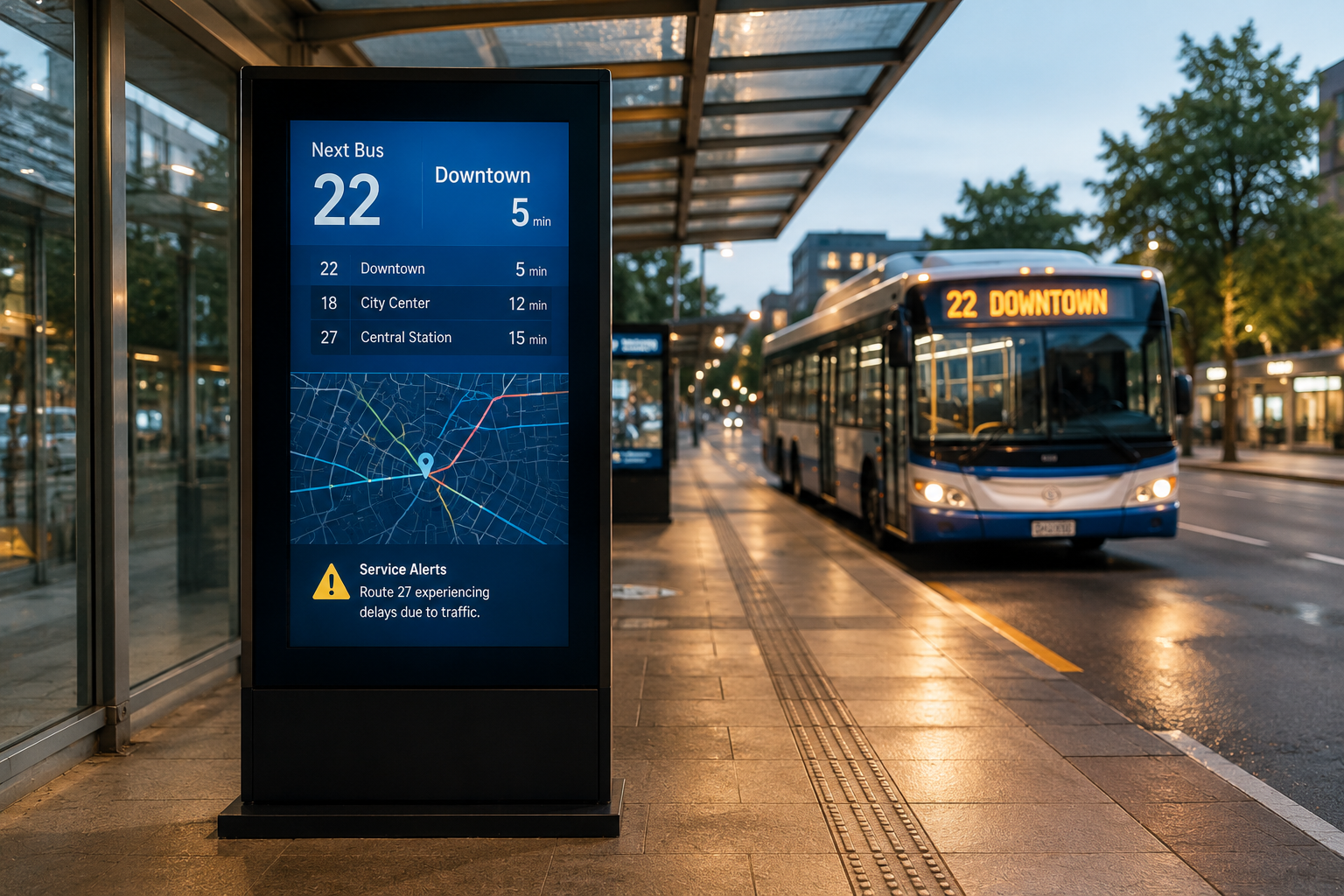
Out there where city streets hum, screens at bus stops start telling riders when buses will actually show up. Instead of guessing, people see times that shift with traffic, right before their eyes. Information flows differently now - routes appear alongside delays, thanks to glowing panels mounted on poles. When storms roll in, warnings pop up faster than paper timetables ever allowed. Even detours and closures get shared mid-morning, slipping into view between ads and news. Announcements once shouted through tinny speakers now land silently, readable in daylight. Weather numbers blink beside platform names, changing by the minute. No more flipping brochures; answers hang in clear sight, updated without human hands. Waiting feels different when data moves like this, steady and sharp.
Waiting at a stop feels less stressful when screens show arrival times clearly. When people see exactly when their bus or train arrives, choices become easier. Transit providers gain trust simply by sharing updates as things happen. Knowing what comes next keeps travelers calm even if delays occur.
Interactive Passenger Engagement
Out here, busy transit spots now roll out touch-screen stations that help people move easier through terminals. Not only do these standalone units hand out route charts plus departure times, they also guide users straight to where they need to go. Instead of waiting in line, folks grab boarding details on their own. From city buses to airport gates, the machines dish real-time updates alongside neighborhood tips. Some even point toward nearby eateries or attractions without needing staff involvement. With each tap, passengers feel more in control of their journey.
Inside stations, screens showing travel details help travelers stay informed. These displays pop up near gates, sharing departure times instead of paper notices. Updates about delays appear instantly across hallways and waiting zones. When urgent messages need spreading, flashing alerts take over the boards. From arrival changes to gate switches, digital signs guide movement quietly. Even during disruptions, the system keeps relaying critical info without announcements.
Emergency Communication and Safety
When things go wrong - storms hit, delays happen, someone's unsafe - digital signs help keep travelers informed right away. Keeping people safe on buses, trains, or stations isn’t optional; it’s built into how transit systems run every day.
Alerts reach every station, terminal, and hub without delay because these systems move fast. Safety gets a boost when messages arrive right on time through such networks. Responsiveness in daily operations grows stronger thanks to instant delivery of urgent updates.
Centralized Content Management
One screen at a time, visibility grows when systems talk to each other. From one place, transport managers adjust messages on signs far away using StreamPurple’s tool built for movement hubs.
From a single hub, airport teams push updates - flight changes appear instantly on screens, ads shift without delays, alerts go live the moment they’re needed. Timing each message becomes smoother when one system handles schedules, breaking news, promotions, all at once. Every display stays in step because coordination happens from one place, not scattered points. Real-time edits mean nothing waits, whether it is gate adjustments or urgent notices flashing across terminals.
Why Choose StreamPurple?
Out there among bustling transit hubs, StreamPurple crafts displays that just work - airports lean on them, so do rail stops, bus depots, subways, even cities shaping their future. These digital signs? They stick around, grow when needed, stay simple to run. Communication gets clearer. Wayfinding feels natural. Safety cues land better. Travelers pay attention, move easier, notice what matters.
Out there, where signs flash updates and maps guide steps, StreamPurple fits into motion. Not just screens showing delays but messages that shift when storms hit - this system stays ready. Instead of waiting for tomorrow’s tech, it works now across buses, trains, and terminals. Even ads change smoothly without freezing mid-transition. When alarms sound, instructions appear clearly. No extra parts needed. Just consistent signals flowing through crowded hubs.
Frequently Asked Questions
What is digital signage for transportation?
Out there where people move through airports or train spots, screens pop up with live updates. These displays show what time things leave, where to go next, warnings if plans shift. Instead of paper signs, moving words guide steps across busy halls. Information shifts on its own, minute by minute. Ads appear too, mixed into the flow of travel details. Buses, subways, platforms - they all lean on these glowing panels. What you see changes fast, just like the places themselves.
How do airport flight information display systems work?
Fresh data flows through screens at airports, showing up-to-the-minute arrival times because backend systems keep pulling live feeds. Gate numbers appear clearly when changes happen, since updates link directly from airline sources instead of manual entry. Departure details shift smoothly on monitors, thanks to constant syncing between ground staff and central databases. Passenger alerts show without delay, pulled by automated triggers rather than human input. Information stays current across every terminal, updated each second so travelers see what matters now.
What are the benefits of bus stop digital signage?
Right there at the corner, screens show when buses arrive, along with changes to routes. Weather pops up too, mixed between city notices that keep people informed. Ads appear now and then, fitting into the flow without taking over. Waiting feels easier because of what shows on the display. Information moves smoothly across the screen, helping riders stay aware.
Why is digital wayfinding signage important for airports?
Lost? Not likely when screens guide people through sprawling airport halls, making movement smoother. One wrong turn fades into the background as directions appear just in time. Movement gains rhythm once signs point the way without words piling up. Clarity shows up quietly, step by step, as travelers follow paths that make sense now.
What is transportation hub digital signage software?
From one central spot, transit managers run digital signs at busy travel centers. Updates flow smoothly to many screens at once. Scheduling messages happens without visiting each display. A unified system keeps information current. Control stays simple even with numerous locations involved.
How does emergency alert digital signage improve safety?
When things go wrong on transit routes, digital signs deliver urgent warnings fast. These displays share vital updates when service breaks happen. Alerts appear instantly if danger is near. Safety messages pop up right away during crashes or delays. Information spreads quickly through electronic boards. During big problems, screens help keep people informed. Critical details show up without waiting. Transit systems use them to explain what went sideways. Sudden changes get broadcast live via these tools.
Remote handling of airport digital signage content possible? Management done from a distance?
True. Airport staff can change flight details, alerts, ads, or urgent notices instantly using today’s digital display systems - no need to be on-site. Remote control makes updates fast, even during busy travel hours. Screens adjust the moment new data arrives, keeping travelers informed without delay.