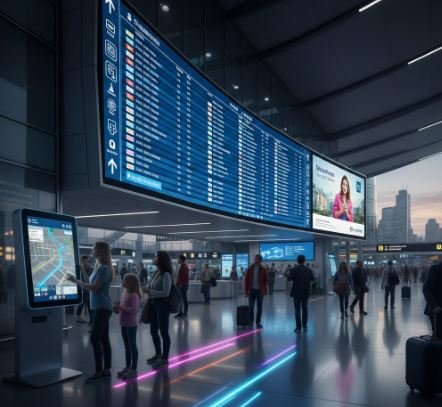
If you spend any time at airports, railway stations, or bus stops, you’ll notice one thing—people are always looking for information. Which platform? Is the bus delayed? Where’s the boarding gate? This is exactly where digital signage in transportation helps.
Instead of static boards or repeated announcements, digital screens give clear, real-time information that passengers can actually rely on.
- Real-time schedules and service updates
The most basic and useful role of digital signage is showing live schedules and traffic status. Screens placed at bus stops, metro stations, airports, and railway platforms keep travelers informed without confusion.
Delays, cancellations, route changes, or unexpected issues can be communicated instantly. When these screens are connected to the backend system, updates happen automatically—no manual work, no repeated entries, and fewer mistakes.
- Helping people find their way
Large stations and airports can be stressful, especially for first-time travelers. Digital wayfinding screens make navigation easier.
Whether someone is trying to locate a boarding gate, platform, exit, or basic facilities like washrooms and food counters, digital displays guide them step by step. In many places, interactive touch screens are used so passengers can search on their own instead of standing in long help-desk queues.
- Making waiting time less frustrating
Waiting is part of travel, but it doesn’t have to feel boring or annoying. Digital signage helps fill that gap.
Apart from travel information, screens can show news, weather updates, destination tips, or simple visual content. Some transit locations even use light entertainment or local information to keep people engaged. It may seem small, but it genuinely improves the overall travel experience.
- Sharing updates, announcements, and promotions
Digital screens are also useful for sharing important announcements, safety messages, or general updates. Since travelers are already paying attention to the screens, the message reach is much better than posters.
Many transport authorities also use these displays for advertising, which helps recover costs and generate extra revenue.
- Earning from digital screens
One practical advantage of digital signage is monetization. Advertising slots on screens at airports, metro stations, or bus terminals are valuable because of high footfall.
Local businesses, brands, and service providers benefit from this exposure, while transport operators gain an additional income stream.
Common digital signage setups in transport
In most transport environments, you’ll usually find:
- Information kiosks for maps, schedules, and instructions
- Digital display screens for live updates and announcements
- Payment or ticketing terminals to reduce manual counters
Each of these helps reduce confusion and saves time for both passengers and staff.
How StreamPurple fits in
StreamPurple works on digital signage solutions for transportation and airports with a practical approach. Their focus is on systems that are easy to manage, simple to update, and reliable in real-world conditions.
Content can be updated from a central dashboard using a web browser, which makes managing multiple locations much easier—especially for airports, metro networks, and large transport hubs.
FAQs
Is digital signage really useful for transport?
Yes. It reduces confusion, improves communication, and saves time for both passengers and operators.
Can these screens work outdoors?
Yes. Outdoor digital signage is designed to handle sunlight, dust, and weather conditions.
Do passengers actually use interactive kiosks?
In busy locations, yes. They reduce dependency on staff and help people find information quickly.
Can transport operators earn from these screens?
Definitely. Advertising on digital screens is a common and effective revenue source.
Is it difficult to manage content on multiple screens?
Not if you use a centralized system like the one offered by StreamPurple.
Follow us on Instagram